
ISO 50001 Energy Management System
Reduce your energy costs and reduce your environmental impact from energy consumption. Improve the energy performance of your business with ISO 50001 Energy Management System. Take a step for a sustainable future now!
What is ISO 50001 Energy Management System?
ISO 50001 is an internationally recognized energy management standard developed by the International Organization for Standardization (ISO). This standard provides a framework for organizations to establish, implement, maintain and continuously improve an Energy Management System (EMS). ISO 50001 aims to increase energy efficiency, reduce energy costs and minimize environmental impacts from energy consumption. This standard is applicable to organizations of all types and sizes and aims to address energy management with a systematic approach. ISO 50001 guides organizations in reducing energy consumption and continuously improving energy performance.
The most current version of the standard published by ISO was published in 2018 as ISO 50001:2018.
Benefits of ISO 50001 Standard
The ISO 50001 standard covers sustainability for organizations in relation to both operational processes and energy consumption.
Improving Energy Performance
ISO 50001 helps identify areas of high energy consumption and implement energy efficient measures. In this way, organizations can reduce their energy consumption, save energy costs and reduce their environmental impact from energy consumption. It also makes energy management more measurable by using energy performance indicators (EnPGs) and energy baselines (EnRELs).
Sustainability and Environmental Impact
By reducing energy consumption and greenhouse gas emissions, the Energy Management System can increase sustainability and improve the reputation of the implementing organization in the eyes of stakeholders. This standard provides certification of environmental sensitivity due to energy consumption and encourages the efficient use of natural resources.
Legal Compliance and Competitive Advantage
By complying with ISO 50001, organizations can demonstrate their commitment to energy management and improve their compliance with relevant energy and environmental regulations. This helps organizations meet regulatory requirements and avoid potential sanctions. They can also differentiate themselves from competitors and increase their brand value by demonstrating their commitment to energy management and sustainability.
Scope and Applicability of ISO 50001 Standard
ISO 50001 covers all types of energy and can help any organization improve its energy management. This standard has been created in a structure suitable for the application of organizations of all types and sizes, regardless of geographical, cultural or social conditions. It provides benefits for public institutions and all medium and small-sized companies, including manufacturing and service sectors. The standard is applicable to a wide range of organizations, from primary producers to product manufacturers, service providers, raw material suppliers, and manufacturers of electronic and energy products.
Register Your Quality and Stand Out from the Competition
As USB Certification, we carry out ISO 50001 Energy Management System trainings and audits with our expert trainers and auditors.
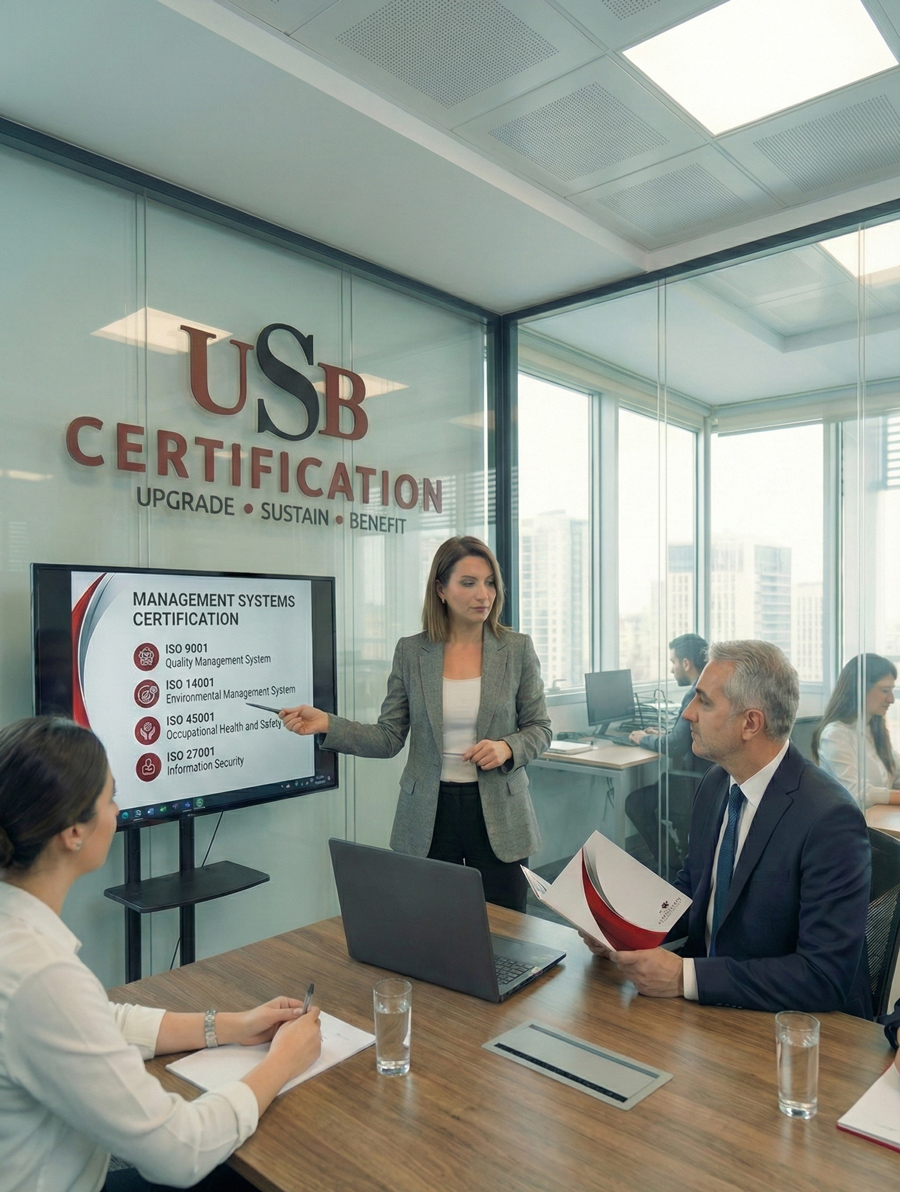
ISO 50001 Certification Process
Organizations wishing to obtain ISO 50001 Energy Management System Certificate, after establishing the energy management system, certification is carried out as follows.
Certification Audit:
Completion of the certification audit in two phases;
Stage 1 Audit: General examination of the documentation prepared by the company within the scope of ISO 50001 Energy Management System.
Stage 2 Audit: On-site control of the documentation applications prepared by the company within the scope of ISO 50001 Energy Management System and identification of appropriate and possible inappropriate issues.
Corrective Actions, Follow-up Audit and Certification:
If nonconformity is detected in the Stage 2 Audit, ISO 50001 Energy Management System Certificate of Conformity is issued after the nonconformity is closed by the organization applying for certification or by the certification body with a follow-up audit according to the type and size of the nonconformity.
Surveillance Audits:
Surveillance audits are audits conducted in the second and third years after the Initial Certification and Recertification audits. In surveillance audits, it is determined that the organization’s ISO 50001 Energy Management System continues correctly.
In the event that non-conformity is detected in the surveillance audit, it is decided to continue the ISO 50001 Energy Management System Certificate of Conformity after the non-conformity detected according to the type and size of the non-conformity is closed by the organization conducting the surveillance audit or by the certification body conducting the surveillance audit by conducting a follow-up audit.
Periodic surveillance audits must be carried out in order to maintain the validity of the ISO 50001 Energy Management System Standard Certificate and to determine that the organization continues to comply with the ISO 50001 Energy Management System Standard. These periodic surveillance audits are 1st Surveillance and 2nd Surveillance audits. The first of these surveillance audits must be completed within 12 months after the Stage 2 and / or Recertification audit and the second within 24 months after the Stage 2 audit.
Recertification Audit:
It is a type of audit conducted in the fourth year after the Stage 2 audit and conducted to organizations that implement the ISO 50001 Energy Management System Standard and have undergone the first certification audit. As in Stage 2, 1st Surveillance and 2nd Surveillance audits, documentation and application control of the organization is carried out by on-site audit.
Frequently Asked Questions
Check Our Other Services

Energy
Accredited certification services for sustainable power and reliability in the energy sector. Invest in environmental…
ISO 14001 Environmental Management System Certification
Reduce your environmental impact and lower your costs with ISO 14001. Apply to USB Certification…
ISO 27001 Information Security Management System
Protect your data, reduce risks, and ensure business continuity with the ISO 27001 Information Security…
ISO 9001 Quality Management System Certification
Elevate your company to international standards with ISO 9001 Quality Management System certification. Contact us…
You may be interested in these topics (Newsletter & News)

Energy Efficiency Inspections Have Begun!
Be prepared for Energy Efficiency Act inspections. Get ISO 50001 certification through USB Certification to…

2026 Revision of ISO 14001 Environmental Management System S…
ISO 14001:2026 Environmental Management System standard is here. Get the latest information on changes and…

ISO Launches IWA 48 A Framework for Global ESG Practices
Bring your ESG practices up to global standards with ISO IWA 48. Embrace a culture…
