

BRCGS Start!
Food reputation and customer trust are essential for businesses of all sizes. The BRCGS Start! program, USB Certification, with its audits, enables small and medium-sized food businesses to step into the global supply chain and establish a basis for systematic growth in line with international standards.
BRCGS Start! What is it? What are the Main Benefits?
BRCGS Start! is an “entry-level food safety standard” for businesses that are not yet ready to implement the full BRCGS Food Standard. Recommended by grocery chains and brands around the world, this program offers practical support for the challenges SMEs face when setting up a food safety management system. In other words, it gives your business structure, confidence and vision before full certification.
So, how do we put this requirement into practice? Initially, only the basic food safety and quality principles are required; as the business grows, system performance is enhanced with compound requirements.
- Faster entry into the supplier lists of global brands.
- Ensuring market trust and customer loyalty.
- Management system suitable for certification, early control of operational risks.
- Flexibility in audit preparation; opportunity to “upgrade” the document with growing business.
- Visibility in BRCGS Directory and increasing brand value in the whole process.

Standard Structure: Analysis and Implementation
BRCGS Start! is administered at two levels: Basic and Intermediate.
Basic Level: Covers legal compliance and basic food safety requirements.
Intermediate Level: Covers HACCP rules and quality management system.
Target Audience and Application Areas
Certification Process
1
Application and Quotation
The scope and duration of the audit is determined according to the size of the company, the number of employees and the number of processes.
2
Signing the Contract
The obligations of the parties, scope, audit date and fees are clarified.
3
Audit Planning
The experts who will conduct the audit and the visit schedule are determined. Your existing certification system is analyzed; if necessary, possible deficiencies are identified by pre-audit.
4
On-site Audit
With the site visit; completeness of records and adequacy of implementation are checked at this stage.
5
Audit Report and Notification
After the audit is completed, nonconformities are reported. After the nonconformities are closed, the final report is prepared and uploaded to the BRCGS Directory. In case of compliance, it is approved and the certificate is issued.
BRCGS Start! Start Your Journey with USB Certification
Brand Credibility: Make a difference in the global market and gain customer trust.
Future Readiness: Build a strong foundation with BRCGS Start! and gain an advantage in the transition to BRCGS Food Safety Standard applications.
Common Errors and Prevention Methods in BRCGS Start!
Incomplete or Incorrect HACCP Plan
Failure: Failure to identify critical control points (CCPs), incorrect hazard analysis or lack of validation.
Action: Train the HACCP team and review the plan regularly. Implement processes for verifying the CCPs and record keeping.
Inadequate Cleaning and Hygiene Procedures
Failure Absence or non-implementation of cleaning plans, residue accumulation.
Prevention: Establish a risk-based cleaning program. Verify with swab tests and visual checks. Keep complete cleaning records.
Lack of Staff Training
Error: Employees do not know or do not follow food safety rules.
Action: Prepare a training program specific to START! requirements. Conduct knowledge tests after training. Use visual reminders in production areas.
Traceability and Record Keeping Issues
Error: No traceability from raw material to product, incomplete records.
Measure: Establish a traceability system. Conduct regular mock recalls. Ensure that records are up-to-date and accessible.
Frequently Asked Questions
Check Our Other Services

Food and Consumer Product Certification
Ensure a safe supply chain from farm to shelf through food and consumer product certification.…

BRCGS Gluten-Free (GFCP) Certification
Build trust in your gluten-free products with BRCGS Gluten-Free (GFCP) certification. Discover USB Certification’s expertise…

BRCGS Food Safety Standards
Certify product quality & safety with BRCGS Food Safety Standard. Boost international recognition and brand…
BRCGS Plant-Based Certification
Ensure safety of your plant-based products with BRCGS Plant-Based Certification. Boost consumer confidence & expand…
You may be interested in these topics (Newsletter & News)

BRCGS Introduces the New SALSA to START! Transition Tool
Easily transition from SALSA to START! certification using the BRCGS START! transition pathway. Contact us…
BRCGS Ambalaj Malzemeleri Versiyon 7 İçin Yeni Pozisyon Bild…
BRCGS Ambalaj Malzemeleri V7 için P708 Pozisyon Bildirimi yayımlandı. Güncel GFSI 2024 beklentilerine uyum sağlayın.…
New Position Statement (P708) for BRCGS Packaging Materials…
P708 Position Statement for BRCGS Packaging Materials V7 published. Ensure compliance with latest GFSI 2024…
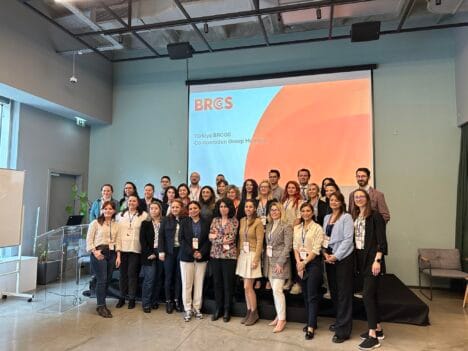
The BRCGS Türkiye CB Cooperation Group Meeting
USB Certification attended the BRCGS Türkiye CB Collaboration Group Meeting. Stay up to date on…
