

IFS Food
The key to success in the food chain is production models that are both safe and legally compliant. IFS standards are at the forefront of the supplier selection of global retail chains and brands, especially in Europe.
What is the IFS Food Standard?
IFS (International Featured Standards) is an internationally recognized suite of audit-based standards that certify quality and safety in the food and non-food sectors. The most well-known sub-standard is IFS Food. IFS Food objectively proves that food products and production processes are safe, of high quality and managed in accordance with legal and customer requirements.
So what does this standard mean for your operation?
IFS Food certification is often required for organizations that want to enter the shelves in Türkiye and Europe and open export markets. Supplier acceptance in global markets is mostly through IFS or an equivalent platform.
In Which Industries Are IFS Standards Applied?
That is, it offers a broad scope that follows agricultural production and includes all the processes by which food is processed.
IFS Food Standard;
- Management commitment to food safety,
- Quality and food safety management system,
- Resource management including personnel and hygiene practices,
- Traceability through production processes,
- With elements such as allergen control
- It is evaluated under the headings of measurement, analysis and continuous improvement.
Certification Process
1
Application and Quotation
The scope and duration of the audit is determined according to the size of the company, the number of employees and the number of processes.
2
Signing the Contract
The obligations of the parties, scope, audit date and fees are clarified.
3
Audit Planning
The experts who will conduct the audit and the visit schedule are determined. Your existing certification system is analyzed; if necessary, possible deficiencies are identified by pre-audit.
4
On-site Audit
With the site visit; the entire chain is monitored from raw material entry to shipment, from personnel hygiene to equipment validation. Completeness of records and adequacy of implementation are checked at this stage.
5
Audit Report and Notification
After the audit is completed, nonconformities are reported. After the nonconformities are closed, the final report is prepared and uploaded to the IFS Database. In case of compliance, it is approved and the certificate is issued.
Take your food safety management system to the next level!
As USB Certification, we offer fast and reliable solutions to your business in accordance with international standards in the IFS Food certification process.
Benefits Provided by the IFS Standard
Direct and easy access to European retail chains and global brands
Objectively certify that products and processes are safe, high quality and legal
Risk mitigation and brand prestige in the market
Advantage in customer satisfaction and crisis management through continuous audits and system updates
Process Steps and Typical Errors
Failure to Insufficient differentiation between allergens, raw and cooked products in the production area.
Measure: Physically separate production areas. Strictly enforce cleaning and disinfection procedures.
Error: Incomplete supplier approval processes or outdated raw material specifications.
Action: Establish supplier evaluation and approval procedures. Update raw material specifications regularly. Record incoming quality controls.
Errors: Incomplete production records, broken traceability chain.
Prevention: Record all processes from raw materials to the final product. Conduct traceability tests regularly.
Failure Lack of staff knowledge of food safety culture and hygiene rules.
Precaution: Implement regular training programs. Support hygiene rules with visual materials. Conduct internal communication activities that promote food safety culture.
Frequently Asked Questions
Check Our Other Services

Food and Consumer Product Certification
Ensure a safe supply chain from farm to shelf through food and consumer product certification.…
IFS – International Featured Standards
Ensure global compliance with IFS standards through USB Certification. Bring the quality of your products…

Food
Discover USB Certification for a secure future in the food industry. Apply now for certification…
IFS Progress
IFS Progress helps SMEs achieve food safety management. Contact us for internationally recognized certification.
You may be interested in these topics (Newsletter & News)
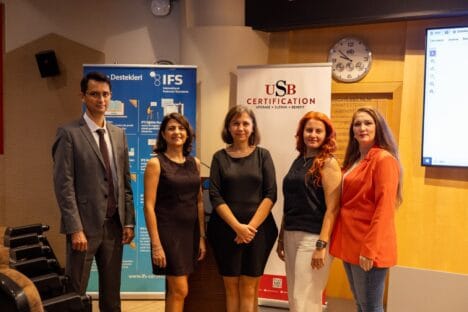
First Stop of IFS Food Standard and Applications Seminar Ser…
The first stop in the IFS Food Standard and Best Practices seminar series took place…

Bursa IFS Food Standard and Applications Seminar Took Place
IFS Food Standard seminars in Bursa, in collaboration with USB Certification and IFS, have successfully…

İstanbul IFS Food Standard and Applications Seminar Took Pla…
IFS Food Standard seminar series in Istanbul, organized with USB Certification and IFS, successfully completed.…
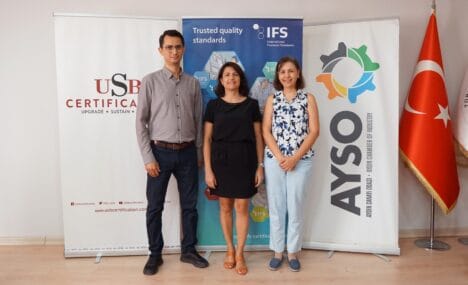
The Second Session of Our IFS Food Standard and Applications…
The second session of the IFS Food Standard and Applications Seminar series, organized in collaboration…
