
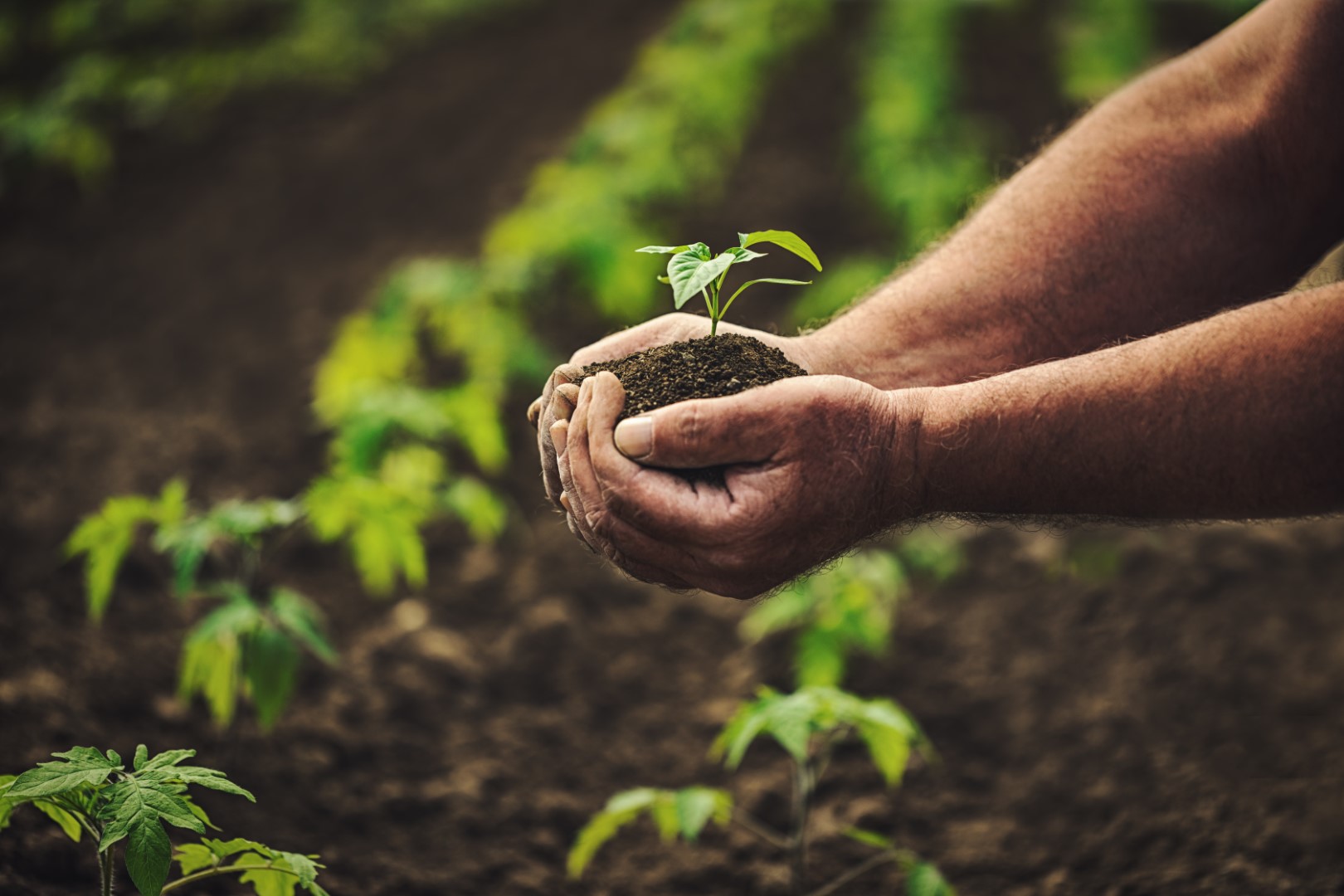
Organic Agriculture Certification
Organic agriculture is not only about not using chemicals; it also means the holistic protection of soil, water, biodiversity and consumer health. As USB Certification, we offer certification solutions that make organic production in every link of the agricultural sector compliant with the legislation, traceable and strong in the market.
What is Organic Agriculture?
Organic agriculture is a production system in which synthetic chemical fertilizers, pesticides, hormones, GMOs and similar inputs are not used, and every stage from production to harvest, from storage to marketing is controlled by legal legislation.
So what does this standard mean for your operation?
When you switch to organic production, you don’t just change fertilizers/pesticides; your entire business model, including soil management, crop rotation, recording system, storage and logistics, is reshaped with a focus on “traceability”. (This is the most overlooked detail in the field: when going organic, only field application is considered, recording and traceability take a back seat).
Why is the Organic Agriculture Certificate Strategic?
Certification Process
1
Application and Preliminary Information
- The enterprise/farmer submits information on land, product pattern, previous production method, storage and processing facility, if any, with the application forms.
- At this stage, the scope (crop production, animal production, processing, packaging, etc.) is clarified.
2
Offer and Contract
- An annual control-certification offer is created according to your area size, number of products, number of producers (in producer groups), processing steps and risk profile.
- Once the contract is signed between the parties, you become a formal party to the organic system as an “entrepreneur”.
3
Organic System Plan (OSP) and Documentation
- Plots, parcels, boundaries, buffer zones, previous pesticide/fertilizer use, storage, inputs used, water source, equipment are laid out in a detailed plan.
- Determine the forms and workflows you will use for sowing, planting, harvesting, storage and sales records. (This plan is the first document the auditor looks at.)
4
Transition Period (from Conventional to Organic Production)
- Depending on whether the land has been treated with chemicals in the past or not, a “transition period” of 2-3 years is applied.
- During this period, products are “transitional”; they cannot be labeled as fully organic, but they offer a critical learning ground to get your system in place.
5
On-site Control (Audit)
- The authorized inspector inspects the land, warehouse, animal shelters, processing areas, records and inputs used.
- When necessary, it takes soil, leaf, product or input samples and sends them for laboratory analysis.
- In producer groups, producer visits are made by sampling method; the internal control system within the group is also tested.
6
Nonconformities, Corrective Actions and Decision
- For minor nonconformities (e.g. missing records), time is given and corrective action is requested.
- In severe cases, such as the use of inputs contrary to the Regulation, organic status for the relevant parcel/product is denied or suspended.
- When all conditions are met, an “organic farming certificate” and a “product certificate” are issued for each batch.
7
Annual Inspections and Unannounced Visits
- The certificate is live; routine checks are carried out at least once a year.
- Additional checks and sampling, with or without notice, are possible depending on the risk situation. This serves as critical insurance for you to maintain market confidence.
Switch to Organic Farming with Confidence
Have your land and crops analyzed for organic suitability and plan your certification process with USB Certification.
Benefits of Organic Agriculture Certificate
Market and price advantage
You get organic shelf space, higher unit prices and a loyal customer base.
Export opportunities
In markets such as the EU, UK and Gulf countries, organic products are virtually impossible without certification.
Protection of soil and water assets
Chemical load is reduced, soil health and fertility become sustainable in the long term.
Brand equity and corporate reputation
An organic brand image creates a strong positioning with both the consumer and the retailer.
Risk management and traceability
The process, with every step recorded, is your greatest assurance in the event of a complaint or recall.
The Most Challenging Points for Producers
Documents
Frequently Asked Questions
Check Our Other Services
Agriculture Certification
USB Certification provides agricultural certification services under the authority of Turkey's Ministry of Agriculture and…
Regenevate
Certify your sustainable farming practices with Regenevate certification. Improve soil health and biodiversity. Apply now!
Republic of Turkey Ministry of Agriculture and Forestry
Get USB organic farming certification, approved by Turkey's Ministry of Agriculture and Forestry. Apply now!

Organic Content Standard (OCS)
Certify organic content with OCS. Validate sustainable production with USB Certification. Learn more!
You may be interested in these topics (Newsletter & News)

USB Certification Takes Its Place at the Organic Farming Pan…
USB Certification took part in the Organic Farming Panel. Discover our organic farming certification processes…
USDA Introduces New Certification Requirements for Organic P…
Learn about the USDA’s new certification requirement for organic product imports. Ensure compliance with USB…
New Era in Organic Agriculture from the EU Council: Simplifi…
EU Council streamlines organic farming regulations, reducing producer burden & strengthening oversight to boost consumer…
USB Certification and EKOAGROS Have Agreed to Cooperate
USDA NOP organic certification in Türkiye is here! USB Certification and EKOAGROS partner to bring…
