

ISO 22000 Food Safety Management System
Every stage in the food chain plays a critical role, from brand reputation to human health. ISO 22000 Food Safety Management System provides an internationally recognized integrated solution for the production and supply of safe food.
What is ISO 22000?
ISO 22000 is an international standard developed to ensure food safety along the entire food chain – from the producer to the shelf. It derives its principles from the Hazard Analysis and Critical Control Points (HACCP) system and the basic management principles of ISO 9001. The standard eliminates food-borne risks and ensures compliance with legal requirements from supplier selection, production, storage, distribution and all the way to the consumer.
Which Sectors and Companies Does ISO 22000 Apply to?
- Food producers, processors and retailers
- Packaging, transportation and storage companies (including packaging industry)
- Companies producing auxiliary equipment, additives and cleaning materials in contact with food
- Catering, restaurant, food and beverage and mass consumption organizations
- Feed producers
In other words, the organization operating at every stage from “farm to fork” falls within the scope of ISO 22000 activities.
Which Sectors and Companies Does ISO 22000 Apply to?
In other words, the organization operating at every stage from “farm to fork”falls within the scope of ISO 22000 activities.
System Setup and Basic Requirements
Top management takes the lead with policies, objectives and resource allocation. A cycle of strategic leadership and continuous improvement is established.
Risk analysis is performed for all hazards (biological, chemical, physical). Critical control points and monitoring requirements are identified. Pre-requisite programs (PRP) and support programs such as hygiene, pest control, cleaning are designed.
Management of recording, documentation and traceability is ensured at every stage of the processes from production to storage, distribution to logistics. Supplier selection and raw material control are carried out together with the file and field application.
Awareness of food safety is made sustainable across the entire team. It is essential that trainings are applied and updated at least once a year.
Each batch of product must be traceable from raw material entry to shipment. Simulations and documents are kept up to date so that quick action can be taken in possible crises (such as product recalls).
Certification Process
1
Creation of necessary documentation and procedures by the company
2
Receipt of application and bidding (Audit duration varies depending on the size of the company, number of employees and process)
3
Contract signing
4
Audit planning
5
Realization of the audit (two-stage document + field)
6
Completion of the audit process
7
Surveillance audits (certificate valid for three years; independent audit every year)
Take your food safety management system to the next level!
As USB Certification, we offer fast and reliable solutions to your business in accordance with international standards in the ISO 22000 certification process.
Common Mistakes and How to Avoid Them
Missing HACCP and risk analysis
Documentation and field implementation do not match
Lack of critical control point monitoring records
Failure to keep staff trainings up to date
Benefits of ISO 22000
Frequently Asked Questions
Check Our Other Services

Food and Consumer Product Certification
Ensure a safe supply chain from farm to shelf through food and consumer product certification.…

FSSC 22000 Food Safety System Certification
What is FSSC 22000, which sectors can apply, certification steps and benefits of system installation.…

IFS Food
Demonstrate the safety and quality of your products in accordance with international standards through IFS…

Food
Discover USB Certification for a secure future in the food industry. Apply now for certification…
You may be interested in these topics (Newsletter & News)
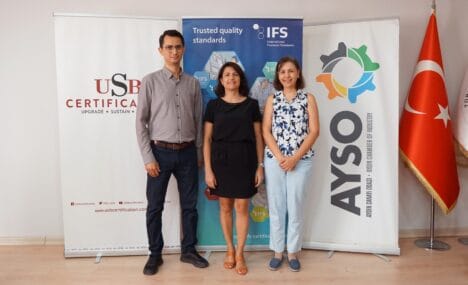
The Second Session of Our IFS Food Standard and Applications…
The second session of the IFS Food Standard and Applications Seminar series, organized in collaboration…
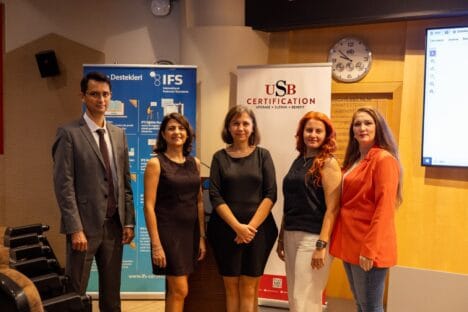
First Stop of IFS Food Standard and Applications Seminar Ser…
The first stop in the IFS Food Standard and Best Practices seminar series took place…
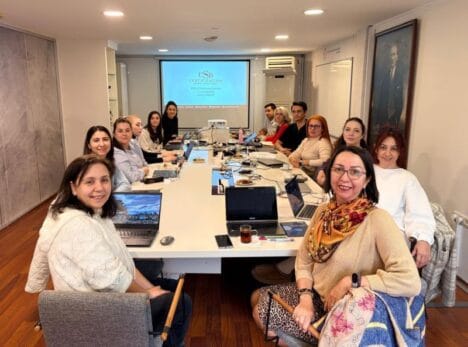
IFS In-house Training Successfully Completed
USB Certification has successfully completed the IFS In-House Training to improve audit and operational quality.…

BSI’den Gıda Sektörüne Önemli Adım: PAS 96:2026 Gıda Savunma…
BSI'dan PAS 96:2026 Gıda Savunması Kılavuzu ile gıda sektöründe kasıtlı tehditlere karşı koruma sağlayın. Detaylı…
